

Omise AI
AIによる業務効率化
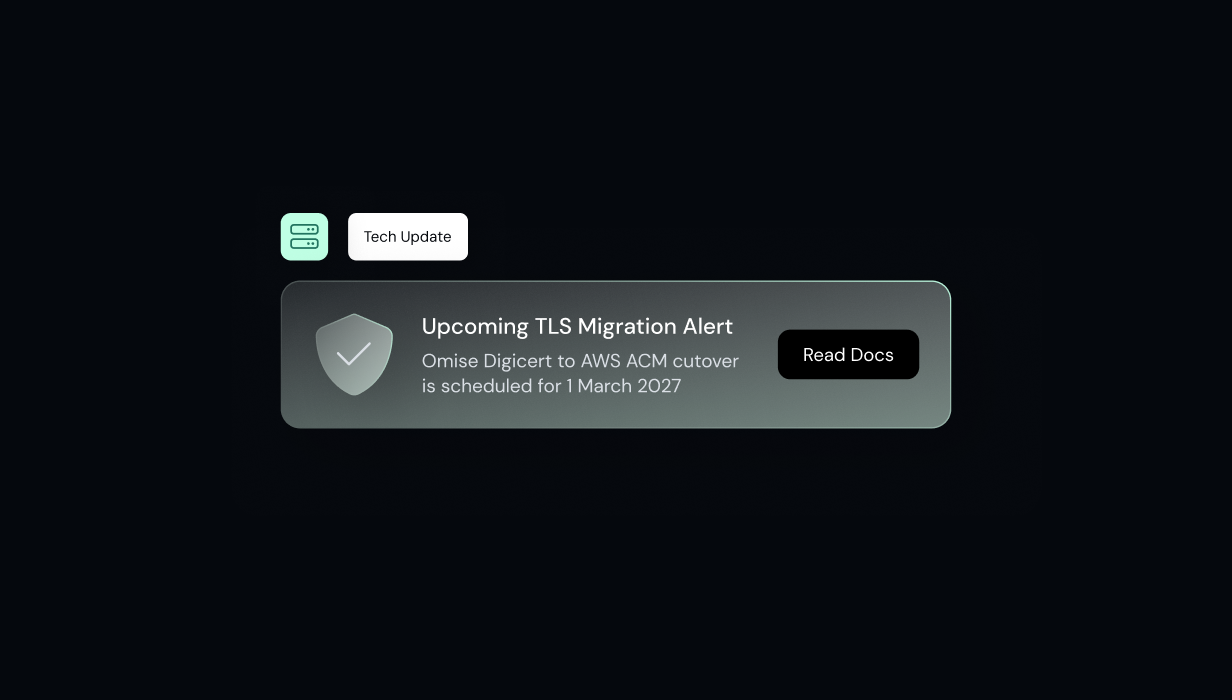
Omiseでは、インフラストラクチャのセキュリティ、信頼性、処理速度の向上に継続的に取り組んでいます。その一環として、2027年3月1日に、サーバーのSSL/TLS証明書をDigiCertからAWS Certificate Manager(ACM)へ移行します。
ほとんどの加盟店様は、設定を変更する必要はありません。ただし、証明書ピンニング、カスタムトラストストア、レガシー環境、TLSインスペクション機能をご利用の加盟店様は、移行前にシステムを確認し、互換性を検証してください。
以下の方法で、ご利用の環境を検証し、変更が必要かどうかをご確認いただけます。
一般的なウェブブラウザまたはモバイルアプリからOmiseのサービスにアクセスしている場合、通常、対応は必要ありません。ただし、ご利用のOSが以下の基準を満たしている必要があります。
確認の目安: 2015年以降に一度でもソフトウェアアップデートを受けている端末またはブラウザであれば、新しいAWS証明書は標準で信頼されています。
OmiseのAPIと連携するバックエンドサーバーを運用している場合は、サーバーのルート証明書ストアを直接確認できます。サーバー環境にログインし、以下の指定テストエンドポイントへの接続確認を実行してください。
cURLを使用する場合:
Bash
curl -I https://api-test.omise.co/
確認する内容: コマンドの実行後、HTTPステータスコード(200や401など)が正常に返された場合、ご利用のサーバー環境は移行に対応しています。
OpenSSLを使用する場合
Bash
openssl s_client -connect api-test.omise.co:443 -verify_return_error確認する内容:Verify return code: 0 (ok) と表示されれば、システムが証明書を信頼し、正常に接続できることを確認できます。
コードを使用してOmiseと連携している場合、開発担当者は任意のプログラミング言語で簡単なテストスクリプトを実行し、テスト環境への接続互換性を確認できます。
Python の例:
Python
import requests
try:
    response = requests.get('https://api-test.omise.co/')
    print("Verification Successful! Status code:", response.status_code)
except requests.exceptions.SSLError as e:
    print("Verification Failed (SSL Error):", e)
Node.js の例:
JavaScript
const https = require('https');
https.get('https://api-test.omise.co/', (res) => {
    console.log('Verification Successful! Status code:', res.statusCode);
}).on('error', (e) => {
    console.error('Verification Failed (SSL Error):', e.message);
});
Java の例:
Java 7u75以降、Java 8u25以降、およびJava 9以降のすべてのバージョンは、通常、AWS ACMを標準でサポートしています。ただし、アプリケーションによっては、独自に分離された証明書トラストストア(cacerts)を使用している場合があります。ご利用のJVM環境が新しいエンドポイントを認識できることを確認するため、以下の簡単なコードを実行して検証することをおすすめします。
import java.io.IOException;
import java.net.HttpURLConnection;
import java.net.URL;

public class CertificateTest {
    public static void main(String[] args) {
        String testUrl = "https://api-test.omise.co/";

        try {
            URL url = new URL(testUrl);
            HttpURLConnection connection = (HttpURLConnection) url.openConnection();
            connection.setRequestMethod("GET");

            // Trigger the SSL handshake by getting the response code
            int responseCode = connection.getResponseCode();
            System.out.println("Verification Successful! HTTP Status Code: " + responseCode);

        } catch (javax.net.ssl.SSLHandshakeException e) {
            System.err.println("Verification Failed (SSL Error): Your Java environment does not trust the AWS ACM Root CA.");
            e.printStackTrace();
        } catch (IOException e) {
            System.err.println("Connection Failed (Network Error): " + e.getMessage());
        }
    }
}
PHP の例:
<?php
$ch = curl_init('https://api-test.omise.co/');
curl_setopt($ch, CURLOPT_RETURNTRANSFER, true);
$res = curl_exec($ch);

if ($res === false) {
    echo "cURL Error: " . curl_error($ch);
} else {
    echo $res;
}

curl_close($ch);
まれに、レガシーなバックエンドサーバーまたは独自設定のエンタープライズファイアウォールから https://api-test.omise.co/ への接続確認に失敗する場合があります。この場合、ご利用のシステムのルート証明書ストアに、Amazon Trust Servicesの証明書が含まれていない可能性があります。
問題を解決するには、ネットワーク管理者がAmazon Trust Servicesの公式リポジトリからAmazon Root CA 1をダウンロードし、ご利用の環境のローカルの信頼済みルート証明書ストアにインポートする必要があります。
新しいAWS ACM証明書への切り替えは、2027年3月1日に予定されています。
検証テスト中に予期しないエラーが発生した場合は、 support@omise.co までお問い合わせください。


