

Omise AI
AI-powered efficiency

E-commerce has evolved into a foundational sales channel for businesses worldwide and a core part of the global economy. According to a study by Juniper Research, the total value of e-commerce payments is projected to surpass $13 trillion globally by 2030, a 57% increase from $8.3 trillion in 2025.
This growth is driven by changing consumer behavior. A survey by McKinsey & Company found that nearly 40% of consumers reported shopping for groceries online within the past week, while one in three consumers now considers platforms like Amazon or Taobao their primary shopping destination.
With this rising demand, businesses need a secure and easy way to accept online payments. This is where a payment gateway comes in, helping online businesses process transactions smoothly and securely.
But what is a payment gateway, and why do businesses need one? This article explains the basics of a payment gateway and how it can help your business grow and scale faster in 2026.
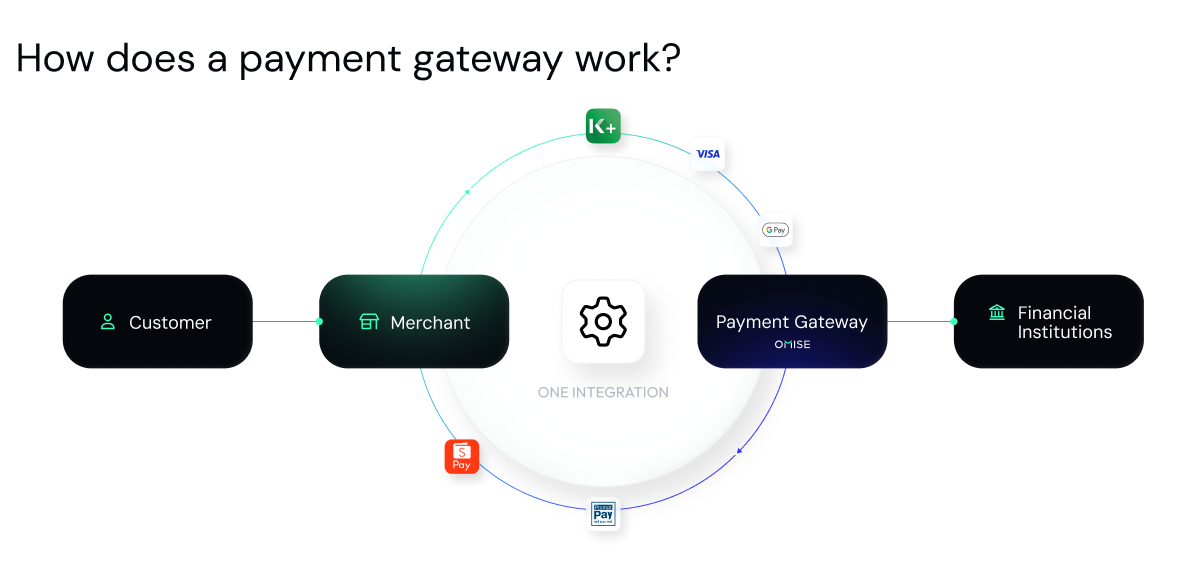
A payment gateway is the technology that allows businesses to accept online payments securely and efficiently. It acts as a bridge between customers, merchants, and payment providers, ensuring that transactions are processed safely while protecting sensitive customer data through measures such as encryption, tokenization, and fraud prevention.
With a payment gateway, merchants do not need to connect separately to each payment provider or manage complex payment operations on their own. Instead, all online transactions can be handled through a single integration and managed in one dashboard, making payment acceptance simpler, faster, and more reliable.
Beyond security and efficiency, payment gateways also provide solutions that improve the customer experience and increase conversion rates by reducing friction at checkout and making it easier for customers to complete payments.
A payment gateway acts as a middleman between customers, merchants, and financial institutions. It is involved from the very first step of the payment journey.
1. Collect and secure payment information at checkout
When customers select a payment method and enter their payment information on the checkout page, the payment gateway securely encrypts the data and sends it to the payment processor for approval.
2. Send the payment request for approval
The payment processor sends the transaction to the relevant bank or payment provider, depending on the payment method used. For card payments, the request is sent through the card network to the issuer bank, which decides whether to approve or decline the payment.
3. Confirm the payment and charge the customer
If approved, the payment gateway charges the customer and transfers the money to the business’s account according to the settlement schedule.
If not approved, the payment is declined and the customer is asked to try again or use a different payment method.
4. Updates payment status in the dashboard
The payment gateway updates the status of each transaction in real time and displays it in a dashboard. As a result, businesses don’t need to manually check transfers or match payments to customers. Payments are automatically tracked and organized in one place.
Payment gateways come in different types, depending on how the checkout experience is hosted and how deeply the business integrates with the payment system.

The types of payment gateways outlined above may already help narrow down your options based on business size and transaction volume. But what else should businesses consider?

Even the most advanced payment gateway won’t help your business reach its full potential unless it fits your business model. To find the right match, start with a simple question:
What do you sell, and how do your customers usually pay?
If none of these options fully fit your business model, many payment gateway providers, including Omise, offer expert support to help design a solution tailored to your specific needs.
Customers are used to fast, intuitive digital experiences in their everyday lives, and checkout is no exception. That’s why your payment gateway should support a smooth and reliable checkout experience for your customers.
If you’re new to payment systems, here are some basic standards to look for when evaluating a payment gateway’s security and reliability:
A good payment gateway shouldn’t feel complicated for the teams using it every day. From the start, documentation should be developer-friendly and easy to work with, without requiring a large engineering team to integrate and maintain.
It should also offer flexible integration options to suit different setups — from APIs for businesses with their own websites to plug-ins for e-commerce platforms such as Shopify or Wix.
Meanwhile, clear pricing is just as important. A trustworthy payment gateway should not come with hidden costs. At Omise, we offer a simple, transparent pricing model with no setup or monthly fees. Businesses pay per transaction, with clear details on transaction and transfer fees available upfront to support decision-making.
With the arrival of AI, technology is evolving fast. It is only right that your payment gateway keeps up with these emerging technologies.
Agentic commerce is approaching, where AI agents can browse, decide, and make payments on behalf of real people. Modern standards such as MCP and A2A protocols play a crucial role in enabling AI tools to interact with payment infrastructure. These foundations make it possible for payment systems to adapt as new commerce models emerge.
A future-ready payment gateway also offers a range of AI-powered tools that help teams work more efficiently and make better decisions. These include smart dashboards, AI assistants, as well as payment orchestration with intelligent routing, which automatically directs transactions through the most suitable payment paths to improve authorization rates and reduce failed payments.
On the security side, AI-powered fraud protection continuously learns from new patterns and signals. When combined with human oversight, it helps businesses respond to emerging threats while maintaining reliability and trust across their payment operations.
Choosing a payment gateway in 2026 is no longer just about accepting payments. It’s about building a foundation that supports how your business operates today and tomorrow. Taking the time to evaluate the right factors early helps businesses avoid costly changes later and move forward with confidence.
Explore how Omise’s payment gateway can support your business today.
Resources
The secret to a seamless payment experience. (n.d.). Visa. https://corporate.visa.com/en/sites/visa-perspectives/innovation/optimizing-payment-experience.html
Pymnts. (2024, September 20). 77% of shoppers say ‘No sale, bye’ if preferred payment option missing. PYMNTS.com. https://www.pymnts.com/news/payments-innovation/2024/77-percent-of-shoppers-say-no-sale-bye-if-preferred-payment-option-missing/#:~:text=As%20the%20demand%20for%20diverse,platforms%20and%20ensure%20customer%20satisfaction.
Juniper Research. (2025, September). ECommerce market to surpass $13 trillion by 2030 globally, with Stripe, Visa, and PayPal leading the charge. Juniper Research Ltd. https://www.juniperresearch.com/press/ecommerce-market-to-surpass-13tn-by-2030-globally/
McKinsey & Company. (2025, June 9). State of the Consumer 2025: When disruption becomes permanent. Retrieved January 27, 2026, from https://www.mckinsey.com/industries/consumer-packaged-goods/our-insights/state-of-consumer


